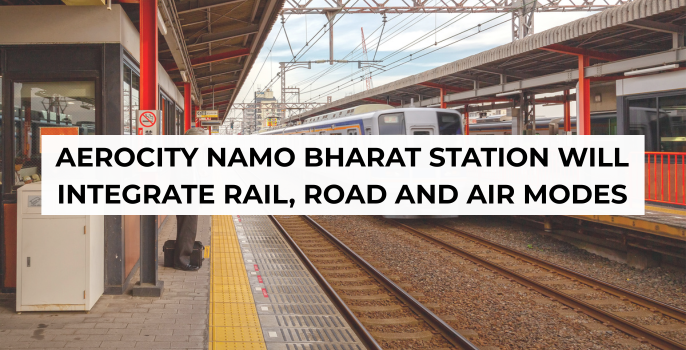
Aerocity Namo Bharat Station Will Integrate Rail, Road and Air Modes
Catching a flight from Delhi can feel like a relay race – metro, cab, luggage, traffic, repeat. The upcoming Aerocity Namo Bharat station is being built to break that pattern for good. This integrated hub will bring high-speed regional trains straight into the Airport Line and IGI. The aim is to ensure you move across NCR on predictable timings and with far less stress. And that is exactly where this new multi-modal station changes your everyday travel story.
Overview of the Aerocity Namo Bharat Station
The Aerocity Namo Bharat station lies strategically near Terminal 3 of the IGI Airport. It is a location chosen for maximum access as well as convenience. It will form part of the new Delhi to Aerocity to Saket to Tughlakabad RRTS corridor.
The objective of designing this line is to link South Delhi with Gurgaon as well as other NCR zones in record time. It will encourage more people to use public transport. The Aerocity Station is the synergy of expressway access and Airport metro connectivity. It stands out as a major piece of integrated transport planning that supports the future development of Delhi.
How Aerocity Will Integrate Rail, Road & Air Travel?
What makes this hub remarkable is its triple-mode connectivity model that allows passengers to switch effortlessly between trains, roads, and flights. Here is how the integration of the Aerocity IGI airport link works.
Each of these layers has been planned to function simultaneously so that travellers can move with minimal waiting time. You’ll find elevated walkways connecting the RRTS platforms with nearby metro levels, making interchanging as simple as changing floors in a building. Travelators will help passengers move with luggage, while signage will make the RRTS Aerocity station intuitive.
Commuters reaching by car will have access via NH-48 alongside the Dwarka Expressway loop. The dedicated shuttle services will take travellers to the airport terminal gates.
It is a welcome relief during peak hours. This integration is designed for both convenience and speed. It merges three major systems into one accessible unit that genuinely supports Delhi’s transport goals.
Key Benefits for Commuters
Every great transport upgrade is judged by how it improves people’s daily movement — and this one promises a major shift. Here is what you should be aware of.
Easier Access from Delhi NCR
You can now reach the airport from the NCR or South Delhi without worrying about traffic snarls. The rail-road-air connectivity in Delhi will feel complete.
Unmatched Speed of RRTS
The Namo Bharat trains are engineered for 160 km/h speeds. It means people working in IT parks or business districts across NCR can save valuable commuting hours. The infrastructure around the RRTS will have last-mile facilities like travelators as well as dedicated pick-up zones.
Reliability for Frequent Flyers
A strong edge of this transport system is reliability. The connections are synchronised between the metro, RRTS, and airport systems. Therefore, the delays caused by interdependent timings will reduce sharply. The new arrangement makes sense for frequent travellers, corporate employees, and even weekend flyers who want to keep things efficient.
Impact on Real Estate Around Aerocity & the RRTS Corridors
Whenever a major transit hub is planned, property markets nearby start shifting, and this will be no exception. Localities encircling Aerocity – from Vasant Kunj to Mahipalpur, Dwarka, and Palam – are expected to witness substantial growth in housing value. Commercial developers are already anticipating a rise in co-working spaces, hotels, and corporate offices as travel time between regions shortens.
These infrastructure-led zones act as catalysts for local development (as we have seen across similar RRTS-linked cities). For investors and homebuyers, this means you’ll likely see new residential clusters emerging near the interchange points, too. The connection to the airport and the RRTS will increase price resilience. It is because areas with solid transit facilities maintain stronger long-term value.
Here is a quick look at the property markets that will get a boost alongside the Delhi infrastructure projects 2025.
- Mahipalpur: Residential areas near the hospitality strip are becoming attractive for professionals linked with airport operations.
- Dwarka: With the enhanced metro, airport, and RRTS overlap, housing demand will rise for new-age buyers.
- Aerocity: Hotels, co-working hubs, and premium service apartments are expanding rapidly under hospitality-friendly development rules.
Buyers as well as investors are counting on the idea that commuting ease always multiplies property appeal. Better connectivity often redefines convenience – and Aerocity’s new status ensures that this corridor will remain desirable for decades.
How this Station Transforms Mobility in Delhi NCR?
With its construction in progress, the Aerocity station represents a strong shift in how mobility within NCR will function. When high-speed trains, metro lines, and air routes communicate efficiently, residents notice immediate lifestyle changes. The entire region begins operating more cohesively. This broader impact is being viewed as a massive NCR mobility upgrade.
The strength of such integration lies in reach. You will be able to travel from Meerut or Noida to the IGI Airport without traversing the main expressways.
The travel time between distant urban nodes will drop once the RRTS Aerocity connection is operational. The continuous service connectivity can turn Delhi into a regional hub that genuinely supports smart commuting.
To put the larger scale in perspective, this Aerocity hub links closely with the Delhi Ghaziabad Meerut RRTS. This ensures that passengers from Ghaziabad or Meerut can directly exit at IGI through the same network. That efficiency forms part of the bigger Namo Bharat Delhi update, which outlines a fully linked commuter network for NCR cities.
Expected Timeline & Project Progress
Construction efforts around Aerocity are currently gathering momentum, keeping pace with other southern stretches of the RRTS corridor. Tunnelling and interchange designs have reached their advanced stages, especially the parts adjoining the airport boundary and Dwarka link roads.
Experts have confirmed that the aim is to align full operations with the Aerocity connectivity in 2026 target year. Here’s a brief look at the current status and activities observed around this stretch:
- Civil packages near IGI Airport are underway, with core structural foundations visible.
- Interchange designs between Airport Line and RRTS have been finalised.
- Road and air-side coordination is being managed through joint review teams.
Within a year or two, passengers can expect test runs and phased openings. The government intends to make the operational framework compatible with airline schedules. It will reinforce the hub’s multi-modal design.
Why Integration Matters Deeply?
Delhi’s traffic is a shared concern. Even well-developed roads can feel strained because people still depend heavily on cars and cabs for short-distance links between railheads and the airport. That’s why physical integration between systems matters more than new lines alone — it makes each existing transport mode more efficient.
As a commuter, you will feel the difference in time saved. You will find the movement smoother, whether it is a Monday morning flight or a client meeting in Gurgaon.
Conclusion
The Aerocity Namo Bharat station symbolises Delhi’s step into a future where travel truly connects through one dynamic hub. The integration plans highlight how multi-modal design can reshape movement in the city.
As the corridor expands under the Namo Bharat Delhi update and enters the testing phase closer to Aerocity connectivity in 2026, you can expect smoother access. The stronger rail-road-air connectivity in Delhi will boost the value of properties in the nearby areas.
To invest in this growing urban network, contact Bhavishya Nirman for RERA-approved builder floors in Bhiwadi at 9899550700. You’ll discover government-approved homes designed to match NCR’s expanding infrastructure and tomorrow’s connectivity standards.
Search Blog
- Maple Apartment
- Hibiscus Apartment
- Marigold Apartment
- Cosmos Apartment A*B
- Cosmos Apartment C
- Camellia Apartment B&C
- Camellia Apartment E
- Camellia Apartment A
Our Properties
Recent Posts

Is Buying Flats Safe In Chattarpur?
21 Sep 2023